
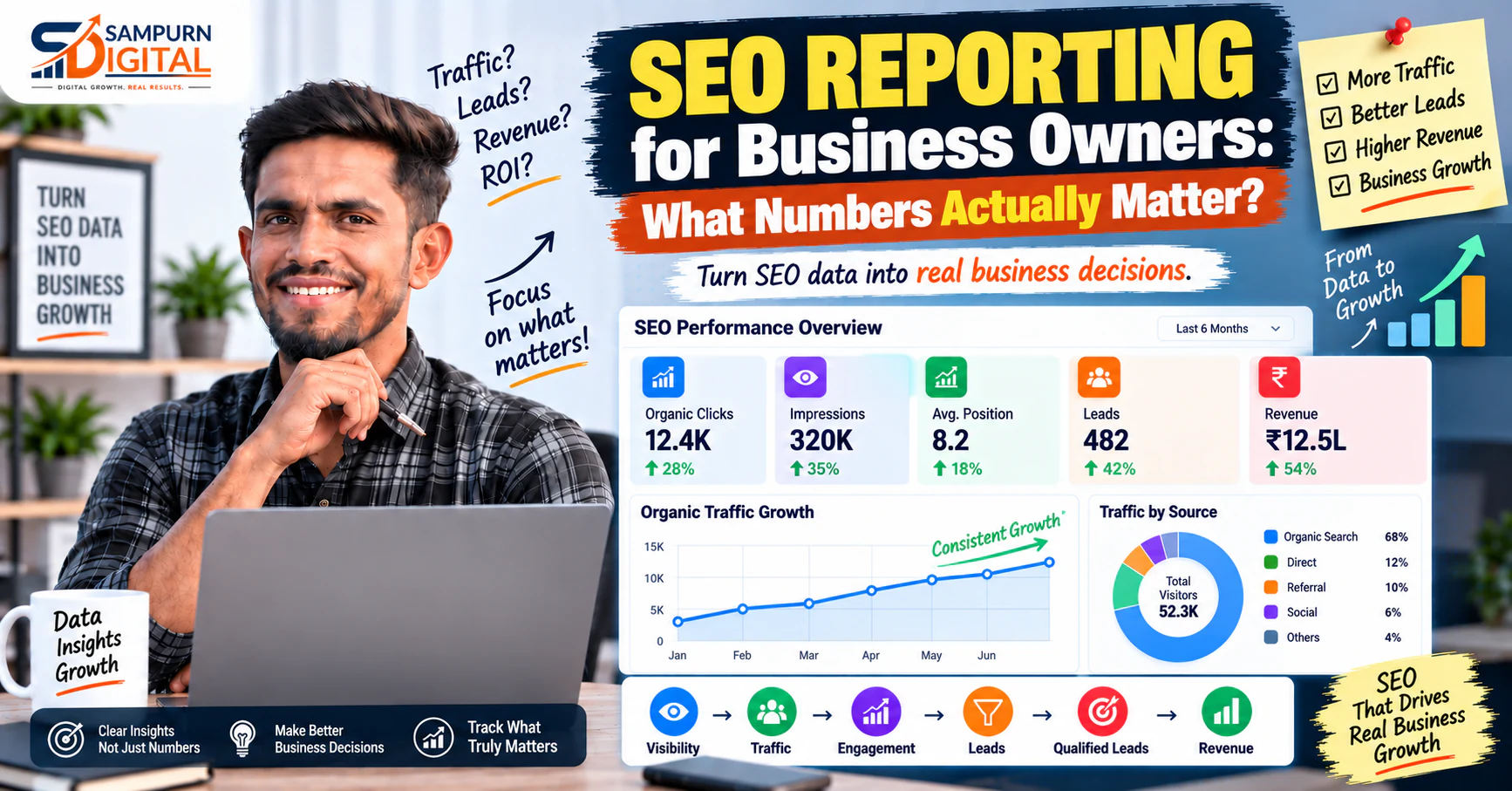
SEO reports can easily become a collection of numbers that look impressive but don't help you make better business decisions.
You may receive a monthly report showing:
- Organic traffic
- Keywords
- Impressions
- Clicks
- Average position
- Backlinks
- Pages indexed
But then the most important question remains unanswered:
Is SEO actually helping the business grow?
For a business owner, SEO reporting should not be about understanding every available metric.
It should be about understanding what changed, why it changed, what it means for the business and what should happen next.
A good SEO report connects search visibility with qualified traffic, leads and revenue.
This guide explains the SEO reporting metrics for business owners that actually matter, which numbers should be treated as supporting indicators and how to build a practical monthly SEO reporting system.
First: Don't Judge SEO by One Number
There is no single SEO metric that can explain performance.
Organic traffic can increase while leads decrease.
Rankings can improve while revenue stays flat.
Impressions can increase while clicks remain unchanged.
That means SEO needs to be evaluated as a connected system.
A useful model is:
Search Visibility ↓ Organic Traffic ↓ Relevant Visitors ↓ Engagement ↓ Leads / Sales ↓ Qualified Opportunities ↓ Revenue
Each stage tells you something different.
The mistake is treating one stage as the final answer.
The 7 SEO Numbers Business Owners Should Watch
If you want a simple executive-level SEO dashboard, start with:
- Organic clicks
- Organic impressions
- Search visibility / ranking trends
- Organic landing pages
- Organic conversions
- Qualified leads
- Revenue influenced by organic search
These numbers provide much more context than a giant spreadsheet containing hundreds of keywords.
Level 2: Traffic
- Organic clicks
- Landing pages
- Relevant visitors
Level 3: Engagement
- Engagement
- Page interactions
- Internal navigation
Level 4: Conversion
- Leads
- Calls
- Forms
- Purchases
Level 5: Business
- Qualified leads
- Sales opportunities
- Revenue
- ROI
The further down the hierarchy you go, the closer the metric is to business impact.
SEO Reporting Checklist
Visibility
- Organic impressions reviewed
- Important ranking trends reviewed
- Commercial keyword groups reviewed
- Lost visibility identified
Traffic
- Organic clicks reviewed
- Landing pages analyzed
- Traffic quality reviewed
- Traffic changes explained
Content
- Growing pages identified
- Declining pages identified
- High-traffic low-conversion pages identified
- High-conversion low-traffic pages identified
Conversion
- Organic conversions tracked
- Lead quality reviewed
- Qualified leads tracked
- Sales tracked
- Revenue reviewed where possible
Technical
- Indexing reviewed
- Crawlability reviewed
- Important technical issues reviewed
- Page performance reviewed
- Mobile experience reviewed
Reporting
- Executive summary prepared
- Major changes explained
- Problems prioritized
- Next actions defined
- Business impact communicated
Stop Guessing. Build a Scalable Inbound Engine.
Get a free SEO audit / Explore SEO Services
Frequently Asked Questions
Direct answers to common doubts regarding organic search traffic and diagnosis
At a minimum, track organic clicks, impressions, important ranking trends, landing pages, organic conversions, qualified leads and revenue where reliable attribution is available.
No. Organic traffic is important, but relevant traffic, conversions, qualified leads and revenue are closer to actual business outcomes.
Usually not. Focus on strategically important keyword groups and explain meaningful ranking changes rather than overwhelming stakeholders with every query.
SEO metrics such as impressions and rankings describe search visibility. Business KPIs such as qualified leads, sales and revenue describe commercial outcomes.
Possible causes include lower-intent traffic, poor landing-page relevance, weak CTAs, conversion friction or incomplete tracking.
Monthly reporting works well for many businesses, with weekly monitoring for important changes and quarterly reviews for broader strategic decisions.
Use a clearly defined attribution and cost model. Where reliable revenue attribution is possible, compare SEO-generated or influenced revenue with SEO investment.
Yes, when they have meaningful impact. Explain each important issue in terms of its potential effect, priority and recommended action instead of listing technical problems without context.
Get Expert SEO Help
Need a full SEO audit for your website? Our team can help you identify and fix the exact issues.
Book a Free Consultation